
Organic search drives 43% of all ecommerce traffic – more than paid ads, social, and email combined.
Most stores chase rankings without the right tools. They guess at keyword research, skip technical audits, and track rankings manually across thousands of product pages.
The right ecommerce SEO tools change that. This guide covers every tool category your store actually needs – from site crawlers and rank tracking software to on-page optimization and backlink analysis tools – with clear recommendations by store size and budget.
What Are Ecommerce SEO Tools?
Ecommerce SEO tools are software platforms that help online stores improve organic search visibility across product pages, category pages, and site architecture. They are not general-purpose SEO tools with a shopping cart plugin bolted on.
The difference matters. A standard SEO crawler handles a 50-page website fine. An ecommerce site with 80,000 SKUs, faceted navigation, and dynamically generated URLs needs something built for that scale.
3 core functions define what these tools do:
- Technical auditing – crawling for indexing gaps, broken links, canonical tag errors, and duplicate content from URL parameters
- Keyword research for transactional intent – finding queries where users are ready to buy, not just browse
- Rank tracking at scale – monitoring thousands of product and category page rankings across devices and locations
No single tool does all three well. Most stores run a stack of 2–4 tools covering different functions. That’s not a workaround – it’s the standard approach.
The global SEO software market reached $74.6 billion in 2024 and is forecast to hit $154.6 billion by 2030 (Grand View Research). The growth is being driven primarily by ecommerce expansion and rising competition for organic search rankings.
Ecommerce SEO starts with understanding what tools are actually needed and why – before spending anything on subscriptions.
What Technical SEO Tools Do Ecommerce Sites Need?
Technical SEO is where most ecommerce sites bleed rankings without knowing it. 53% of ecommerce websites have pages with missing canonical tags, and 62.4% have at least one broken link (Reboot Online, 2025).
These aren’t edge cases. They’re baseline failures that crawl tools catch immediately.
Crawl Audit Tools
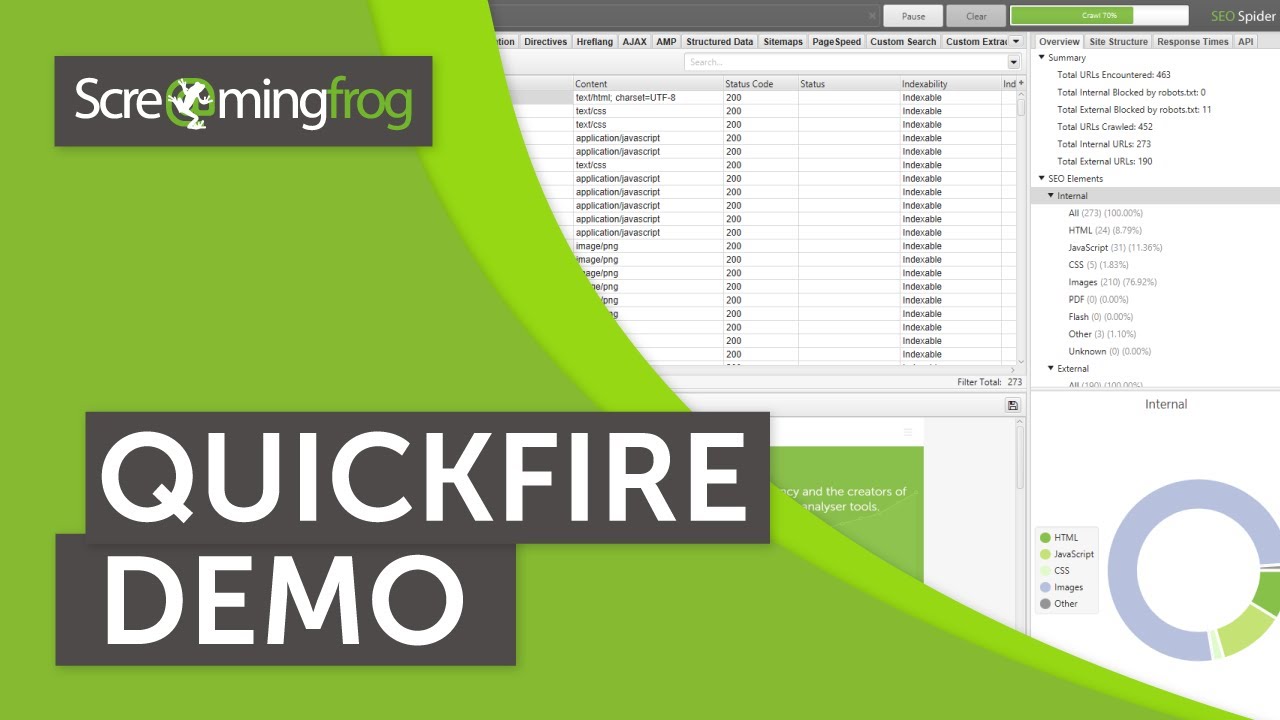
Screaming Frog SEO Spider is the go-to crawl tool for most stores. It maps internal link depth, flags orphaned product pages, identifies duplicate title tags across SKU variants, and handles URL parameter issues that bloat crawl budgets.
Sitebulb offers a visual crawl structure that makes internal PageRank flow easier to see – useful when working with development teams who need diagrams, not spreadsheets.
ContentKing runs continuous real-time crawling. Instead of scheduled audits, it alerts you the moment a canonical tag breaks or a page drops from the index. For large stores pushing frequent product updates, that matters.
| Tool | Best for | Key strength |
|---|---|---|
| Screaming Frog | All store sizes | Deep crawl URL parameter handling |
| Sitebulb | Dev team collaboration | Visual internal link mapping |
| ContentKing | High-frequency publishing | Real-time change monitoring |
Log File Analysis Tools
Crawl data tells you what’s on the site. Log files tell you what Googlebot actually visits.
The gap between the two is usually revealing. Googlebot often ignores large sections of a product catalog while repeatedly crawling low-value filtered pages.
Screaming Frog Log File Analyser handles this for most stores. Enterprise-scale operations use Botify or Splunk to process hundreds of millions of log entries and map Googlebot behavior across the full catalog.
Core Web Vitals Monitoring Tools
Ecommerce sites that load in 1 second have 3x higher conversion rates than those loading in 3 seconds (Portent, 2024). A one-second delay alone reduces conversions by 7%.
Google PageSpeed Insights gives page-level diagnostics at no cost. SpeedCurve adds synthetic and real-user monitoring over time, making it easier to track whether performance fixes actually hold across deployments.
The Chrome UX Report (CrUX) feeds real-world field data directly into Google’s ranking systems. Checking it regularly – not just before a site audit – is the correct habit.
What Keyword Research Tools Work Best for Ecommerce?
Ecommerce keyword research is not about volume. It’s about buyer intent. A keyword with 500 monthly searches and strong commercial intent outperforms a 10,000-search informational term every time for product and category pages.
Long-tail keywords account for 65% of all search queries and convert at 2.5x the rate of broad terms (Ranktracker). That’s where most of the transactional opportunity sits for ecommerce stores.
Platform Comparisons for Ecommerce Keyword Research

Ahrefs Keywords Explorer is the strongest option for ecommerce-specific research. Filtering by CPC alongside keyword difficulty surfaces buyer-intent queries that volume-only filters miss. The Parent Topic feature groups keyword variants under a single page target, which prevents over-segmenting the catalog.

Semrush Keyword Magic Tool combined with Keyword Gap works well for competitive analysis at the category level. It identifies which keywords competitors rank for that your store doesn’t – useful input for building out an ecommerce keyword research process that covers the full catalog systematically.

Google Keyword Planner still has value for one thing: validating search volume estimates before committing to category page builds. Ahrefs and Semrush occasionally diverge on volume. Planner serves as a sanity check, even if it tends to bucket numbers rather than report precise figures.
One thing to look for in any keyword tool: SERP feature analysis. Knowing whether a query triggers a Shopping carousel, a Featured Snippet, or a standard 10-blue-links result shapes how you prioritize page types and which schema markup to implement.
What Are the Best Rank Tracking Tools for Ecommerce SEO?
The average ecommerce brand ranks for 1,783 organic keywords generating around 9,625 monthly visits (Reboot Online, 2025). Tracking those rankings manually is not realistic. Tracking them incorrectly is worse than not tracking at all.
High-Volume Rank Tracking
Daily rank updates. Device split. SERP feature visibility. These are the 3 non-negotiables for ecommerce rank tracking.
Accuranker delivers all three. It pulls daily rankings rather than weekly snapshots, tracks whether Shopping Pack positions appear alongside organic results, and separates mobile from desktop performance – which matters given that 75% of ecommerce traffic now comes from mobile (Reboot Online, 2025).
Mid-Size and Lighter Options
SERPWatcher by Mangools works for smaller catalogs. The Dominance Index metric gives a single-number view of overall ranking health rather than requiring manual aggregation across hundreds of keywords.
Semrush Position Tracking integrates directly with its keyword research workflow, which cuts time when moving from research to tracking setup. The tradeoff is that update frequency is slower than Accuranker for large keyword sets.
What to Track Beyond Standard Rankings
- Shopping Pack appearances for product-level queries
- Local rankings by region for stores with physical locations – relevant for local SEO strategies tied to ecommerce
- Featured Snippet ownership for category-level informational queries
- Ranking volatility after site migrations or platform changes
What On-Page SEO Tools Help Optimize Product and Category Pages?
Retailers that optimize meta titles and product descriptions see a 32% increase in organic sales (BigCommerce internal data). The average ecommerce page title is just 39 characters – well below the 50–60 character standard (Reboot Online, 2025).
On-page tools close that gap at scale.
Content Optimization Tools
Surfer SEO scores category pages against top-ranking competitors using term frequency analysis. It works well for identifying which concepts a page is missing rather than which keywords to stuff in.
Clearscope does the same but with cleaner reporting. I’ve found it more useful for product description work where the word count is tight and every term needs to pull weight.
PageOptimizer Pro goes granular – analyzing exact on-page factor distributions from competing pages to surface specific optimization gaps. More technical than Surfer or Clearscope, but useful when standard recommendations aren’t moving rankings.
For bulk auditing across a catalog, Screaming Frog exports meta title and description data for every page in one crawl. Filtering that export in Excel or Google Sheets to flag under-optimized titles takes under an hour for most stores.
Schema Markup Validation Tools
Pages with schema markup achieve 20–40% higher click-through rates (Charle Agency, 2025). Product schema – covering price, availability, and review ratings – is the highest-priority implementation for ecommerce.
2 validation tools handle this:
- Google Rich Results Test – confirms whether markup qualifies for rich result display in Google Search
- Schema.org validator – checks structural accuracy of the markup itself before deployment
Run both. Google’s tool catches eligibility issues. Schema.org catches syntax errors that Google’s tool sometimes passes through.
For a full picture of what proper schema implementation involves across a store, the dedicated guide on schema markup for ecommerce covers the full range of applicable types beyond just Product schema.
What Link Building Tools Support Ecommerce SEO?
Product pages in the top 2 Google positions have 2.72x more referring domains than those ranking in positions 3–10 (SurferSEO). Backlink volume at the top is not random – it compounds.
Backlink Analysis and Gap Tools
Primary tools: Ahrefs Site Explorer and Majestic.
Ahrefs handles competitive backlink gap analysis between your store and 3–5 competitors simultaneously. It surfaces which referring domains link to competitors but not to you – the cleanest input for outreach prioritization.
Majestic’s Trust Flow and Citation Flow metrics add a quality filter. High Citation Flow with low Trust Flow signals low-quality link patterns that can cause more damage than no links at all.
Outreach and Prospecting Tools
| Tool | Primary use | Best for |
|---|---|---|
| Pitchbox | Outreach automation CRM | High-volume link campaigns |
| BuzzStream | Relationship tracking | Product PR Blogger outreach |
| Ahrefs Link Intersect | Gap identification | Targeting competitor link sources |
The biggest ecommerce brands use digital PR to acquire top-tier backlinks. Smaller brands typically underuse this approach and rely on directory submissions instead (Reboot Online, 2024). That’s a gap worth closing.
Ecommerce-specific link opportunities include manufacturer and supplier pages, product review publications, and comparison sites. A structured ecommerce link building process maps these source types before any outreach starts.
Google Search Console handles disavow file management for toxic links. It doesn’t identify which links to disavow – that analysis happens in Ahrefs or Majestic first.
What Are the Best Tools for Ecommerce Site Structure and Internal Linking?
86% of ecommerce brands lack properly optimized internal links – including 41% of high-visibility sites (Reboot Online, 2025). Internal linking is consistently under-resourced relative to its impact on crawl budget and PageRank distribution.
Crawl-Based Internal Link Auditing
Screaming Frog maps internal link depth across the full catalog. It identifies pages more than 3 clicks from the homepage – product pages buried that deep rarely rank well regardless of content quality.
The orphaned page report is often more useful. Pages with no internal links at all receive no PageRank, no crawl budget allocation, and typically no rankings. Finding them takes minutes. Fixing them has a direct impact on organic visibility.
Visual Link Flow Tools
Sitebulb’s internal linking visualizer renders PageRank flow across site sections as a diagram. This is particularly useful when presenting crawl audit findings to development or product teams who aren’t reading raw crawl data.
For Shopify and WooCommerce stores, LinkWhisper automates internal link suggestions based on content relevance. It doesn’t replace a manual audit, but it reduces the time needed to implement links across large blog or buying guide sections that support category page authority.
Pagination and Faceted Navigation Handling
Faceted navigation is one of the most common sources of crawl waste on ecommerce sites. Crawl tools flag filter-generated URLs that should be blocked via robots.txt or handled with canonical tags rather than crawled and indexed.
Getting this right is a core part of ecommerce technical SEO. Crawl tools identify the problem. The fix requires coordination between SEO and development to implement correctly without blocking legitimate category pages in the process.
What Tools Handle Ecommerce Content Gap Analysis?
96.55% of all indexed pages receive zero organic traffic from Google (Ahrefs). A big part of that failure is missing content – pages that should exist but don’t, and queries that should be covered but aren’t.
Content gap analysis tools find those missing pages before your competitors fill them.
Keyword and Competitor Gap Tools

Ahrefs Content Gap is the most direct tool for this. You plug in 3–5 competing domains, and it surfaces every keyword they rank for that your store doesn’t. The output is a prioritized list of content opportunities mapped to real search demand.
The Semrush Keyword Gap tool works similarly but adds CPC data alongside organic metrics – useful when deciding whether a gap is worth filling with content or better addressed through paid search first.
Google Search Console for Gap Identification
Free. Overlooked. Often more useful than paid tools for finding gaps on existing pages.
The Performance report in Google Search Console shows queries that earn impressions but low click-through rates. These are pages that rank but underperform – usually because the title tag doesn’t match search intent, or the page lacks depth on the exact query triggering the impression.
Filtering by page type (product pages vs. category pages vs. buying guides) turns this into a structured gap-finding workflow. Took me a while to build that habit, but it catches things keyword tools miss entirely.
Mapping Gaps to Page Types
Three gap types matter for ecommerce:
- Product page gaps: transactional queries with no matching product page
- Category page gaps: broad commercial queries with weak or missing category coverage
- Content gaps: informational queries that could drive upper-funnel traffic toward category pages
Semrush Topic Research fills the third category. It surfaces related questions and subtopics around a seed term, which helps build out an ecommerce content marketing plan that supports category page authority rather than existing in isolation.
What Automation Tools Scale Ecommerce SEO Across Large Catalogs?
Manual SEO stops working at scale. A store with 500,000 SKUs cannot audit, update, or optimize pages one at a time. Automation tools handle the volume – but only for specific task types.
Enterprise Crawl and Indexation Automation
Botify is the clearest example of automation built for ecommerce at scale. Its clients include Ralph Lauren and LuisaViaRoma – both managing massive product catalogs where crawl budget waste directly costs rankings. The platform crawls up to 250 million URLs per session and uses log file analysis to show exactly which pages Googlebot visits and which it skips (Botify, Forrester).
The PageWorkers feature deploys technical changes – structured data injection, internal link additions, meta tag updates – across thousands of pages without requiring a development sprint. That’s the part most enterprise teams actually pay for.
Lumar (formerly DeepCrawl) takes a similar approach with scheduled cloud crawls and CI/CD integration, allowing SEO checks to run automatically before every code deployment. Annual contracts for both platforms start around $36,000 (RankYak, 2025).
Workflow Automation for Mid-Size Stores
Python + Screaming Frog API is the practical alternative for stores that need automation without enterprise pricing.
Screaming Frog exposes its crawl engine via API, which means a developer can automate scheduled audits, push results to Google Sheets, and trigger alerts when specific issues appear – all without logging into a dashboard manually.
For product feed management, DataFeedWatch and Channable automate how product data is structured and distributed across Google Shopping, Meta, and comparison engines. Feed quality directly affects Shopping Pack performance, which makes this an SEO-adjacent automation worth including in any mid-size stack.
Template-Based Content Automation
Generating meta titles and descriptions for 50,000 product pages manually is not realistic.
Template-based generation uses product attributes (brand, model, category, key feature) to populate title and description fields at scale. Most ecommerce platforms – Shopify, Magento, WooCommerce – support this through liquid templates or custom fields. The output isn’t perfect, but it gets every page above baseline rather than leaving 80% with empty or duplicate metadata.
For large-scale sites, this is a core part of any SEO strategy built for large ecommerce catalogs, where individual page optimization is impossible and systematic coverage is the only viable approach.
What Are the Best Free Ecommerce SEO Tools?
Free tools cover more ground than most store owners use. The issue isn’t availability – it’s that free tools require more manual effort to extract insights that paid tools surface automatically.
Google Search Console
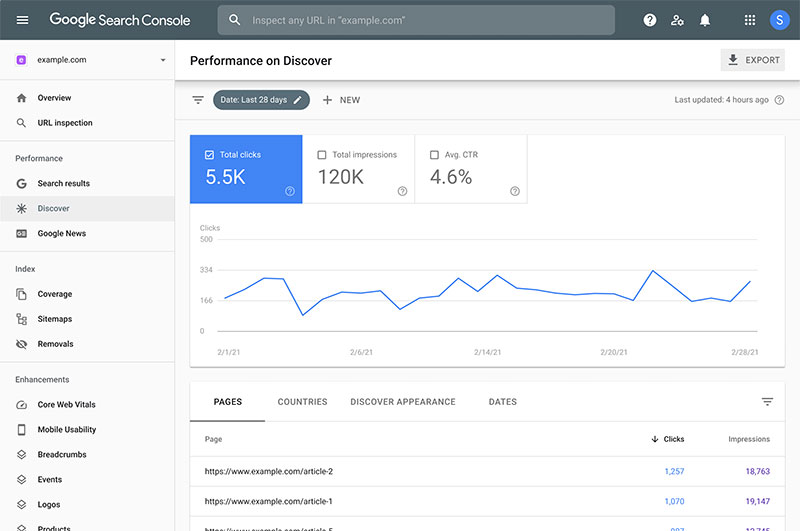
The most important free tool in any ecommerce SEO stack. Full stop.
Google Search Console shows crawl coverage, Core Web Vitals performance, search query data, and page indexing status. Google doesn’t share this data anywhere else. No paid tool replicates it – they pull from it or approximate it.
The Coverage report alone identifies pages excluded from the index, pages with duplicate content issues, and pages blocked by robots.txt. For stores experiencing ranking drops, this is always the first place to check.
Bing Webmaster Tools and PageSpeed Insights
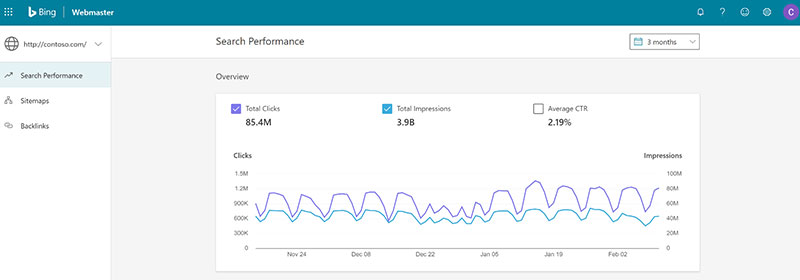
Bing Webmaster Tools is genuinely underused. It provides backlink data, duplicate content detection, and keyword research – all free – for Bing search, which accounts for roughly 3–4% of global search volume but a higher share in certain demographics and markets.
Google PageSpeed Insights delivers Core Web Vitals diagnostics at the page level. It separates lab data (controlled test) from field data (real user experience), which matters because Google’s ranking system uses field data, not lab scores.
Screaming Frog Free Tier and Rich Results Test
| Tool | Free limit | Best use |
|---|---|---|
| Screaming Frog (free) | 500 URLs | Small store audits Spot checks |
| Google Rich Results Test | Unlimited | Product schema validation |
| Google Search Console | Unlimited | Indexing Performance CWV |
| Bing Webmaster Tools | Unlimited | Backlinks Duplicate content |
The 500-URL limit on Screaming Frog’s free tier covers most small stores. For anything larger, it’s a diagnostic tool for specific site sections rather than a full-catalog crawler.
How Do Ecommerce SEO Tools Compare on Pricing?
Tool budgets for ecommerce SEO stack up fast. Knowing the actual numbers before committing to subscriptions prevents over-spending on features you won’t use – or under-spending and hitting limits during the work that matters most.
Core Platform Pricing
Ahrefs starts at $129/month (Lite plan) and reaches $449/month for Advanced (SE Ranking, November 2025). The Lite plan covers most keyword research and site audit needs for stores under 50,000 pages.
Semrush Pro starts at $139.95/month. The Business plan, needed for API access and full historical data, runs $499.95/month. Committing to annual billing saves 16–17% across both platforms.
Specialist Tool Pricing
Screaming Frog: £259/year (approximately $330). One of the strongest value-to-cost ratios in SEO tooling.
Accuranker: starts at $129/month for 1,000 tracked keywords. Scales by keyword volume, not by feature tier – which makes budgeting predictable.
Surfer SEO: starts at $99/month (Essential plan), primarily for content optimization and category page scoring.
Realistic Stack Costs by Store Size
| Store size | Typical stack | Monthly cost |
|---|---|---|
| Small (under 1k SKUs) | GSC Screaming Frog free Mangools | $30–60/mo |
| Mid-size (1k–50k SKUs) | Ahrefs / Semrush Screaming Frog Accuranker | $300–600/mo |
| Enterprise (50k+ SKUs) | Botify / Lumar Ahrefs Enterprise ContentKing | $3,000+/mo |
Understanding where your budget goes relative to your store’s actual needs is part of any honest ecommerce SEO pricing conversation – tools are one cost layer, and agency or in-house labor is typically 3–5x the tool cost for most stores.
What Is the Right Ecommerce SEO Tool Stack by Store Size?
The mistake most stores make is copying enterprise tool stacks at a small-store budget – or staying on free tools long after their catalog has grown past what free tools can diagnose effectively.
Tool Stack for Small Ecommerce Stores
Small stores don’t need Ahrefs. They need Google Search Console used properly, and a lightweight keyword tool to find the 20–30 high-intent queries worth targeting first.
Recommended stack:
- Google Search Console (free)
- Screaming Frog free tier (500-URL crawl limit)
- Mangools or Ubersuggest for keyword research
- Google PageSpeed Insights for CWV monitoring
Total cost: under $60/month. Covers the basics without overcomplicating the workflow for a team of 1–2 people managing the store.
Tool Stack for Mid-Size Ecommerce Stores
Mid-size stores face real competition for category page rankings. That’s where the gap between free tools and paid platforms becomes a business problem rather than a preference.
Ahrefs or Semrush handles keyword research and competitor gap analysis. Screaming Frog (paid, £259/year) covers technical audits across the full catalog. Accuranker tracks rankings daily across product and category pages. Google Search Console and PageSpeed Insights remain in the stack – they don’t get replaced.
Platform-specific behavior matters at this scale. Shopify handles JavaScript rendering differently than Magento, and WooCommerce has its own quirks around pagination and canonical tag implementation. The technical audit process needs to account for which platform is generating the URLs before making recommendations.
Tool Stack for Enterprise Ecommerce Stores
Enterprise stores have a different problem: the tools work fine, but no one has time to act on the data. The value of Botify and Lumar isn’t just richer data – it’s automation that deploys fixes without waiting for a development queue.
Enterprise stack priorities:
- Botify or Lumar for crawl automation and log file analysis
- Ahrefs Enterprise or Semrush Business for keyword and backlink research
- ContentKing for real-time change monitoring across the live catalog
- BrightEdge or Conductor when executive reporting and cross-team workflows become a bottleneck
When the tool stack outgrows what an in-house team can manage, or when the ecommerce SEO strategy needs to be rebuilt around a new platform migration, that’s typically when stores evaluate whether an agency relationship makes more sense than additional tool subscriptions.
Knowing how to choose the right ecommerce SEO agency at that stage – and what to look for beyond case studies and pricing – is a separate decision from picking the right tools, but the two are connected.
FAQ on Ecommerce SEO Tools
What are ecommerce SEO tools?
Ecommerce SEO tools are software platforms built to improve organic search visibility for online stores. They cover technical auditing, keyword research, rank tracking, backlink analysis, and on-page optimization – functions that general SEO tools handle poorly at catalog scale.
Which ecommerce SEO tool is best for beginners?
Google Search Console is the best starting point. It’s free, pulls directly from Google’s data, and covers crawl issues, search performance, and Core Web Vitals. Pair it with Screaming Frog’s free tier for basic site auditing.
Do I need more than one SEO tool for my store?
Yes. No single tool covers every function well. Most stores run 2–4 tools: one for keyword research and competitor analysis, one for technical crawling, and one for rank tracking. Free tools like Google Search Console stay in every stack.
What is the best tool for ecommerce keyword research?
Ahrefs Keywords Explorer leads for ecommerce. Filtering by CPC alongside keyword difficulty surfaces buyer-intent queries that volume-only filters miss. Semrush Keyword Magic Tool works well for competitive gap analysis at the category page level.
How do I track rankings for thousands of product pages?
Use a dedicated rank tracking tool like Accuranker or Semrush Position Tracking. Both support daily updates, mobile vs. desktop splits, and SERP feature monitoring. Manual tracking breaks down past a few hundred keywords.
What tools find technical SEO issues on ecommerce sites?
Screaming Frog is the standard for technical crawl audits – it catches broken links, duplicate content, missing canonical tags, and orphaned pages. Sitebulb adds visual internal link mapping. ContentKing monitors changes in real time.
Are there free ecommerce SEO tools worth using?
Several. Google Search Console, Google PageSpeed Insights, Bing Webmaster Tools, and the Google Rich Results Test all provide real value at no cost. Screaming Frog’s free tier crawls up to 500 URLs, enough for small stores.
What SEO tools work best for Shopify stores?
Screaming Frog handles Shopify crawl audits well. Ahrefs or Semrush cover keyword research and backlink analysis. Google Search Console is non-negotiable. For schema validation on product pages, the Google Rich Results Test confirms markup eligibility before deployment.
How much do ecommerce SEO tools cost?
Ahrefs starts at $129/month. Semrush Pro at $139.95/month. Screaming Frog costs £259/year. A practical mid-size store stack – covering crawling, keyword research, and rank tracking – typically runs $300–600/month total.
When should an ecommerce store switch to enterprise SEO tools?
When the catalog exceeds 50,000 pages, manual audits and standard crawlers stop scaling. Tools like Botify or Lumar handle crawl budget automation, log file analysis, and technical deployments at the volume where point solutions fall short.
Conclusion
This conclusion is for an article presenting ecommerce SEO tools as a layered system, not a single subscription fix.
The right stack depends on catalog size, budget, and where your biggest gaps actually are – technical crawling, transactional keyword coverage, backlink acquisition, or rank monitoring at scale.
Start with Google Search Console and Screaming Frog. Add Ahrefs or Semrush when competitive pressure demands it. Layer in rank tracking software like Accuranker once your keyword list outgrows manual checks.
Tools only work when someone acts on the data. Pick the ones your team will actually use, and build from there.
